

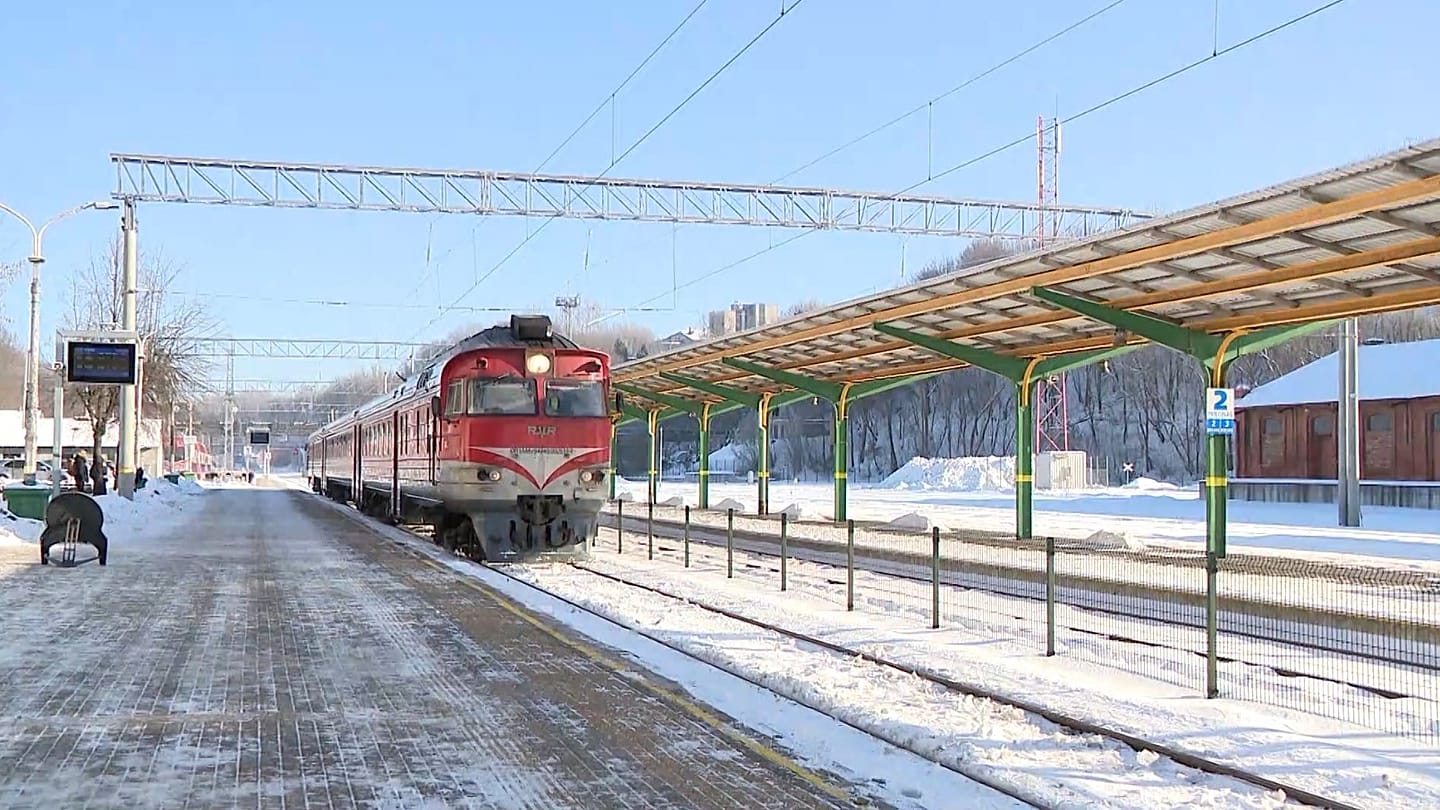
Lithuania wargames security incident on Russian Kaliningrad transit train
Lithuania staged a drill on Monday involving a Russian train incident in Kaliningrad as tensions rise, while Polish K2 tank exercises boosted NATO’s eastern flank.
Lithuania staged a military drill on Monday simulating a security incident aboard a Russian transit train travelling to Kaliningrad, the latest sign of mounting tensions over the rail corridor through its territory.The scenario imagines an incident aboard the train as it passes through Lithuania, resulting in multiple injuries and one fatality.Consequently, the train is forced to stop in Kaunas, where six individuals manage to escape.The military drill is based on an existing incident dating back to last summer, when a Russian citizen disembarked from a transit train in June, raising concerns over potential security risks linked to the corridor.According to Interior Minister Vladislav Kondratovič, the incident in June led to the tightening of transit controls in Lithuania, and prompted the country to improve coordination among institutions.However, he admitted that several "infrastructure decisions" are still pending.Military drills were also conducted in the Polish city of Braniewo, near the Polish border with Kaliningrad.The exercises on the firing range of the Braniewo Armoured Cavalry Brigade featured Korean-made K2 "Black Panther" tanks.The armoured brigade was deployed to the region near the Russian border in August 2025 to bolster NATO’s eastern flank and defend northeastern Poland, including against potential threats from Kaliningrad and Belarus."These are 21st century tanks. Their electronics and power make them incredibly powerful," Lieutenant-Colonel Marcin Jankowski told local media, "their firing range is incomparable to older tanks".Exclave as a security riskKaliningrad is a Russian exclave bordering Lithuania and Poland. Under a Russia-EU agreement signed before Lithuania joined the 27-member bloc, Russian citizens are permitted to travel through Lithuania to Kaliningrad with minimal restrictions.However, Moscow’s increasingly aggressive foreign policy has prompted Lithuanian authorities to view the transit route as a potential security risk.After Russia's full-scale invasion of Ukraine in early 2022, Vilnius began enforcing sanctions on Russian goods transiting through its territory and entering the exclave.Following threats from Moscow, Brussels revised its sanctions recommendations, advising Lithuania to allow rail transit to continue.