

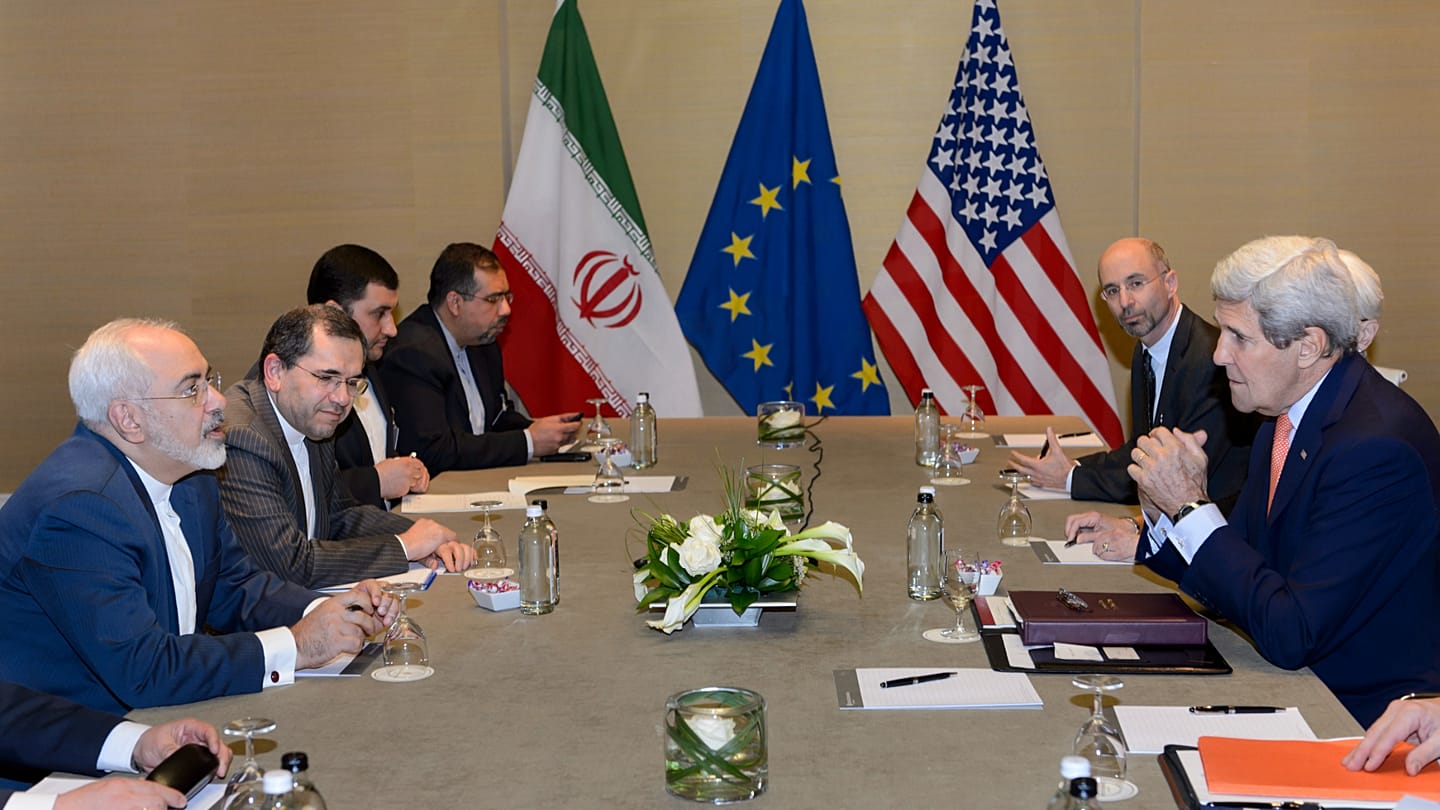
Why do Iran and the US choose Switzerland as common ground for talks?
Since the 1979 Islamic Revolution in Iran, Switzerland has played a pivotal diplomatic role, serving as a conduit for exchanging documents and proposals when direct communication between Washington and Tehran was limited or nonexistent.
Iran and the United States are to hold a second round of indirect nuclear talks in Geneva on Tuesday, as military tensions in the region continued to rise.The choice of Switzerland as the venue has again placed a spotlight on the small Alpine nation's decades-long role as the primary back channel between two countries that have had no formal diplomatic relations since 1980.The estrangement between Washington and Tehran dates to the Iranian revolution of 1979, when supporters of Ayatollah Ruhollah Khomeini overthrew Shah Mohammad Reza Pahlavi.Nine months later, in November 1979, a group of around 400 Iranian students stormed the US embassy in Tehran, taking 66 hostages and demanding that Washington return the Shah, who had been admitted to the United States for medical treatment.The US severed diplomatic relations with Iran, imposed sanctions on Iranian oil imports and froze Iranian assets.Washington turned to Bern in November 1979 for help with its consular and diplomatic relations with Tehran. Switzerland formally accepted the protecting power mandate in May 1980.Swiss Ambassador to Iran Erik Lang, along with colleagues Flavio Meroni, Pascal Décosterd and Franz Muheim, worked to negotiate a resolution to the 444-day crisis, eventually brokering an agreement with Algerian mediation for the release of the hostages."The choice of Switzerland was in line with the Swiss policy of neutrality, but also because we have acquired know-how in this delicate matter," Lang said of the mandate.Switzerland's role evolved from conveying messages to representing interests in full. The Swiss embassy in Tehran has since handled all consular affairs between the two countries, including passport applications, civil status matters and protection for US citizens in Iran.The relationship has extended beyond the bilateral. Switzerland has also represented Iranian interests in third countries, including Canada and Egypt, and supported Iran's accession to the World Trade Organisation, a process formally documented in 2016.Former Swiss Ambassador to Iran Philippe Felti has emphasised that sanctions were the "dominant event" shaping the decades of Swiss engagement, forming the framework within which Bern operated.Nuclear diplomacySwitzerland played a direct role in the negotiations that led to the 2015 Joint Comprehensive Plan of Action.The city of Lausanne hosted preliminary talks in which US, Iranian and European diplomats reached a general framework for the deal, later signed in Vienna, that included limits on uranium enrichment and IAEA monitoring of nuclear facilities.After President Donald Trump withdrew the US from the agreement in 2018, Geneva hosted informal meetings between European and Iranian officials to maintain lines of communication with Tehran.Following the US killing of Iranian Quds Force commander Qassem Soleimani in Iraq in January 2020, Switzerland hosted further confidential meetings between US and Iranian delegations to contain the risk of direct military confrontation.The Swiss embassy in Tehran also served as the channel through which the US and Iran communicated in April 2024, when Iran launched a direct attack on Israel for the first time.Iranian armed forces chief of staff Mohammad Bagheri said Tehran had sent a message to Washington through the Swiss embassy warning that US bases in the region would not be safe if Washington intervened.Tuesday's talks in Geneva are taking place against a backdrop of heightened military pressure, with the US having deployed a second aircraft carrier to the region and Iran's Revolutionary Guard Corps (IRGC) launching exercises in the Strait of Hormuz on Monday.The two sides at the negotiations are represented by Iranian Foreign Minister Abbas Araghchi and US envoys Steve Witkoff and Jared Kushner.Araghchi said he arrived in Geneva "with real ideas to achieve a fair and equitable deal."