

Central Asia boosts green energy, infrastructure and SMEs with EBRD funds
Central Asia and Mongolia received around €1.72bn from the European Bank for Reconstruction and Development last year to fund 120 projects. The investments have a focus on renewable energy, infrastructure and SMEs.
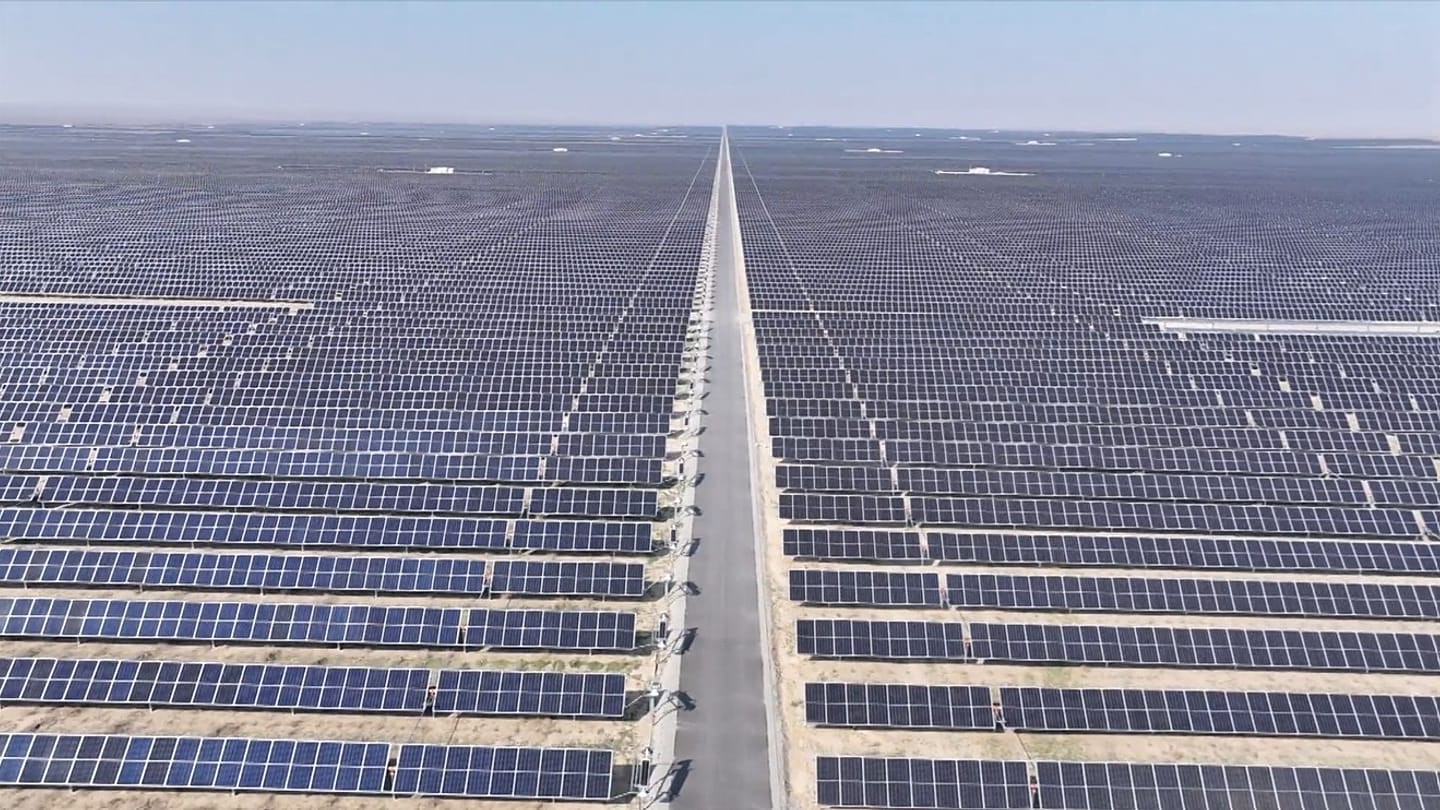
In 2025, the European Bank for Reconstruction and Development (EBRD) invested almost $2bn (€1.7bn) through 120 projects in Central Asia and Mongolia. This represents one of EBRD’s strongest operational results in the region for more than a decade.53 per cent of the EBRD's investment went to promote renewable economy projects. In the lending department, 68% of loans went to private entrepreneurial initiatives.Almost one third of the EBRD's funds supported sustainable infrastructure build-outs.Another third went to local banks for on-lending to small and medium-sized enterprises (SMEs), women and young entrepreneurs, as well as for climate resilience and resource efficiency lending.Uzbekistan was the leading recipient of the EBRD's funding in 2025, for the sixth year running, having secured over $1bn (€880mn).The EBRD also provided almost $440mn (€378mn) for projects in Kazakhstan, $218mn (€188mn) in Mongolia, $212mn (€183mn) in the Kyrgyz Republic and U$100mn (€88mn) in Tajikistan.Renewable energy investmentsThe countries of Central Asia and Mongolia showed a great interest in financing green energy projects. Therefore, as much as 53% of all the assets extended went into the sector.The biggest projects were in Uzbekistan where the EBRD’s funding package of $142mn (€121mn) is supporting the development of Central Asia’s largest combined solar photovoltaic (1 GW) and battery energy storage system (BESS, 1,336 MWh) plant.Implemented jointly with ACWA Power, the project also marks the first investment by Japanese partners in Uzbekistan’s renewable energy and battery storage sector.The EBRD also arranged financing of up to $195.5mn (€168.5mn) for a 300 MW greenfield solar plant and a 75 MWh BESS facility in the Kashkadarya region of Uzbekistan. The project is owned and developed by Masdar, a global renewable and clean energy company.In Tajikistan the launch of all six hydroelectric units of the Qairokkum hydropower plant marked the completion of a major renewable energy upgrade.The plant’s installed capacity has increased from 126 MW to 174 MW, ensuring a reliable electricity supply to 500,000 people in the Sughd province.Sustainable infrastructureEven in the infrastructure sector, most projects are eco-sensitive. For instance, in Uzbekistan the EBRD’s sovereign loan of up to $250mn (€240mn) will finance the modernisation of 110 irrigation pumping stations in 10 regions.New energy efficient pumps are expected to reduce electricity consumption by 251,000 MWh and cut CO₂-equivalent emissions by more than 117,000 tons a year.A financial package of up to €45mn, provided by the EBRD and the European Union, will finance an increase in cargo handling capacity at the port of Aktau.This is Kazakhstan’s primary maritime gateway on the Caspian Sea, and is also identified as one of the key elements of the Transcaspian Corridor.In Tajikistan, the EBRD’s sovereign loan of up to €38mn, and a grant of $86.7mn (€83.5mn) from the Asian Development Bank (ADB), will help to upgrade and expand the road from Dangara to Guliston.This road is an important link between the north and south of the Khatlon region, an area which generates more than 53 per cent of Tajikistan’s agricultural output and is home to 35 per cent of the country’s population.In the Kyrgyz Republic, the EBRD extended a €62mn sovereign loan, which will help to build a new 53km, 500 kV transmission line.Urban sustainability advanced under the EBRD Green Cities programme. Osh in the Kyrgyz Republic joined the initiative, with plans to improve water treatment facilities and shift to greener public transport thanks to a loan of up to €14.7mn and a grant of up to €8.3mn.In Mongolia, a specialised cardiovascular hospital will be built with the EBRD’s sovereign loan of up to $34.9mn (€33.5mn) in Ulaanbaatar, under its Green Cities Action Plan.Financial sector and support for SMEsIn 2025, the EBRD supported more than 4,600 SMEs in Central Asia and Mongolia with business advice, training, mentoring and other business development opportunities.Most of the investment and loans in this sector were channeled to the real economy through partnered financial institutions. In Mongolia, almost 73% will be supporting women and youth-led enterprises, as well as facilitate trade.In Uzbekistan, projects with partner banks generated almost 39 per cent of the EBRD’s annual business in the country. The largest loan package worth $125mn (€108mn) was extended in support of SMEs and green investments.In Kazakhstan, three loans totaling $60mn (€57.6mn) were provided to a local bank.The funds will be used to create growth opportunities for micro, small and medium-sized enterprises, led or owned by young people and women. Another bank also received a loan of up to $25mn (€22.9mn) to support women entrepreneurs.A local microlender, received a loan of up to $7mn (€6mn) under the EBRD’s Youth in Business programme.